
Green Social Prescribing and the Courage to Think Clearly
Trying to do what is “right” and what gets in the way
By Marina Robb, Director, Circle of Life Rediscovery CIC
I have been reflecting recently on a tension that seems to be quietly present across many of the spaces I move in – in conversations around education, health, and more broadly in our cultural discourse. It centres around a genuine desire to do what is “right”, and yet alongside that, a growing sense that this impulse can become distorted in ways that are not always easy to see.
At its best, the desire to do the right thing speaks to care, awareness, and a willingness to look beyond our own immediate experience. It suggests a sensitivity to others and an openness to learning. However, I am increasingly aware of how our sense of “right” and “wrong” can be shaped by the environments we are in, and how easily complexity can become flattened as a result. In that flattening, the possibility of genuine exploration begins to narrow.
Awareness, polarisation, and original “Woke”
The term “woke” sits somewhere within this dynamic. Originally, it pointed towards an essential kind of awareness – an alertness to injustice, inequality, and forms of systemic bias that had long gone unexamined. This is and was essential – along with action. Yet as with many ideas, once it enters wider cultural circulation, it becomes shaped and hijacked by a range of forces that extend beyond its original meaning, and this can introduce extreme views, that most of us would not recognise as every day experience.
There are voices that argue that such ‘woke-ness’ have become detached from reality, that they override common sense, or that they restrict open debate. But what concerns me is that in pushing back against perceived excesses, there can also be a dismissal of the underlying values themselves – empathy, inclusion, and a willingness to recognise difference. We risk silencing voices that are different to us. We let someone else define our experience, identity or truth. We risk dismissing the spell of ‘manipulation and control’ and we risk losing something important if the response becomes as polarised as the thing it critiques.
Much of this sits, in principle, within a set of values that include freedom of expression (not at the expense of harm & the need to consider what is harmful?), protection of minority rights, equality of opportunity, and a trust, however imperfect, in evidence, institutions, and dialogue. I would also include ecological thinking and care whilst caring for humans, rejecting hierarchy and yet acknowledging that we often require leadership. What trade-offs are we willing to make, if any? These are ideals that many of us would likely recognise as important. However, the conditions required to live these values meaningfully are clearly not always present.
Information Overload and Independent Thought
We are operating within environments that are saturated with information, shaped by algorithms, and influenced by social and cultural pressures that can subtly direct how we think and what we believe. In this context, the idea of being a “free thinker” becomes more complex. If our information diet is curated, if we are primarily exposed to views that reinforce our own, and if disagreement feels threatening rather than generative, then our capacity for independent thought and our direct feelings, can become constrained without us fully realising it.
This is where the question of skills becomes important. Not as an abstract educational agenda, but as something deeply practical for navigating the world we are now in. The ability to think critically – to question claims, even when we agree with them – and to notice what might be missing. The ability to recognise how information is shaped, who benefits from it, and how easily narrative can be mistaken for evidence. The ability to create a safe distance from unsafe behaviour and grow into our fullest potential.
Alongside this sits the capacity to hold nuance, to resist the pull towards all-or-nothing thinking, and to stay with complexity without immediately resolving it. There is something important in being able to tolerate discomfort, to notice when we are reacting, and to create enough space to respond more thoughtfully. The ability to communicate clearly also matters here – to define what we mean, rather than relying on labels that carry multiple and often conflicting interpretations. Our capacity to cry is not ‘woke’!
Independence, Courage, and the Skills to Navigate Complexity
There is also something about independence and courage. The ability to think for ourselves, without outsourcing our opinions to louder or more dominant voices, and the willingness to question even those perspectives we instinctively align with. This includes an openness to understanding why others see the world differently, alongside a humility that recognises the limits of our own knowledge.
These are not simply individual traits. They shape how our systems function. In education, they point towards the need to move beyond the transmission of knowledge alone, and towards cultivating ways of thinking that enable young people to navigate complexity, uncertainty, and difference. In health, they influence how we understand the causes of illness and wellbeing, and whether we are able to look beyond symptoms to the wider conditions of people’s lives.
Green Social Prescribing and the Social Roots of Health
I see this particularly clearly in primary care and GP practice, where there is an increasing recognition that a significant proportion of people presenting with chronic illness or mental health challenges are also experiencing social isolation as a key part of their condition. What presents as a medical issue is often deeply intertwined with relational and environmental factors.
This does not undermine the value of medicine, which is highly effective in addressing acute conditions where there is a clear mechanism of change – infection, injury, surgical need. However, when it comes to chronic disease and mental health, the causes are often more diffuse and embedded within the conditions of people’s lives. In these cases, interventions that focus solely on symptom management may not address the root causes.
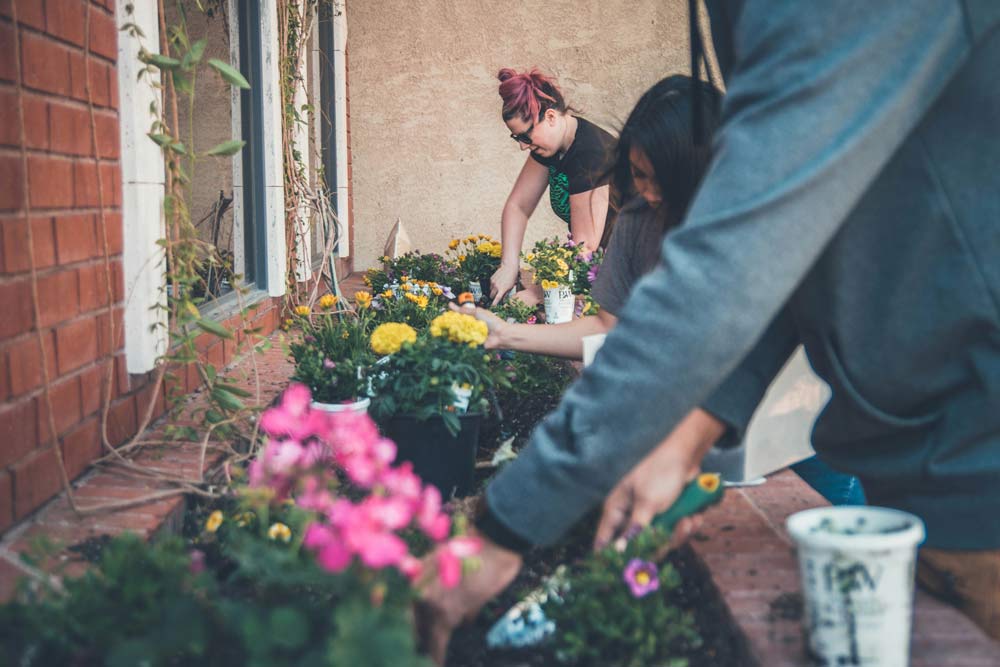
There are emerging approaches that begin to respond to this complexity differently, including green social prescribing, deeper green interventions and community-based initiatives that connect people with shared activities, environments, and relationships. Green prescribing in the UK recognises that health is not only a biological state, but also a social and ecological one, shaped by connection, meaning, and context. The NHS and organisations such as Natural England have been developing green social prescribing pilots precisely because the evidence for nature-based approaches to mental health and wellbeing is growing. Circle of Life Rediscovery has been offering nature-based programmes and days for over 20 years!
Nature-Based Practice: Creating Conditions, Not Just Interventions
This is also where my own work increasingly sits. In nature-based practice, what we are often creating is not an intervention in the traditional sense, but a set of ingredients and values. A welcoming, non-judgemental space, where people are not required to arrive with the “right” perspective, complete a set of ‘nature-tasks’, or have a specific understanding – rather a space where complexity can be held rather than reduced.
In these spaces, something begins to shift. People are able to step out of fixed positions and into shared experience. Thinking becomes less reactive, more spacious, and more grounded. There is often a reconnection – not only with others, but with the natural world and with something more direct and lived.
This feels increasingly important, particularly when we consider the kind of capacities future generations will need. If we are serious about preparing young people and ourselves for a world that is complex, uncertain, and changing, then these ways of thinking and relating may be as important as any body of knowledge.
What Conditions Enable Thoughtful, Grounded Engagement?
Underlying all of this, I sense a broader disconnection from direct experience – particularly from the natural world and from forms of community grounded in shared activity and place. As more of our interactions are mediated through screens and abstracted through language, it becomes easier to engage in debates that are symbolic rather than practical, and to lose sight of the realities that underpin the issues we are discussing.
In this sense, the question of whether “woke” has gone too far, or whether social liberalism is failing, may be less useful than asking what conditions are needed for thoughtful, grounded, and meaningful engagement with the world. What supports our ability to think clearly, to relate to others with openness, and to remain connected to the ecological and social systems that sustain us?
These are not questions with simple answers. However, they point towards the importance of developing both individual capacities and systemic conditions that enable us to move beyond reactive positions and towards a more considered and relational way of being.
Trying to do what is “right” is not only about intention, but also about the context in which that intention is formed, and the skills we have to navigate it. In that sense, the work may be less about choosing sides, and more about strengthening our ability to stay in relationship with complexity, discomfort, with each other, and with the world itself.
Our Work: Nature-Based Training and Green Social Prescribing in Practice
As part of this, we are continuing to explore how these principles translate into practice through our nature-based trainings, including our work with psychiatrists and GPs and our longer Level 3 Certificate in Nature-based Practice, supporting practitioners to bring this way of working into their own contexts.
Our approach to green social prescribing and nature-based wellbeing is grounded in over 25 years of practice with the NHS, schools, and communities across the UK. If you are a health practitioner, educator, or commissioner interested in how green prescribing and nature-based approaches can support your work, we would love to hear from you.